Category: Uncategorized

  • Long-Tail Keywords in 2025: The Definitive Guide

    Long-Tail Keywords in 2025: The Definitive Guide

    When I first started learning SEO, I quickly realized that ranking for short, competitive keywords like “insurance,” “shoes,” or “SEO services” was nearly impossible without a massive budget. That’s when I discovered the real power of long-tail keywords. Over the years, I’ve seen how long-tail keywords have evolved, and in 2025, they’ve become more crucial than ever for building visibility, attracting qualified traffic, and increasing conversions.

    In this guide, I’m going to walk you through what long-tail keywords are, why they matter in 2025, and how you can use them effectively to grow your business or personal brand.

    What Are Long-Tail Keywords?

    Long-tail keywords are search phrases that are longer, more specific, and typically less competitive than short, generic terms. Instead of “shoes,” a long-tail keyword might be “best running shoes for flat feet 2025.”

    The beauty of these keywords is that they capture intent. When someone types “insurance,” they could be looking for definitions, policies, or just browsing. But when they search for “affordable auto insurance in Wooster Ohio,” you know exactly what they’re after.

    In 2025, search engines like Google are smarter than ever. With AI-driven algorithms and voice search dominating, people are asking complete questions and using conversational tones. That’s where long-tail keywords shine—they align with how people naturally search.

    Why Long-Tail Keywords Matter in 2025

    From my own experience managing SEO campaigns, I can confidently say long-tail keywords are the backbone of a successful strategy this year. Here’s why:

    1. Voice Search Is Everywhere

    Think about how you talk to Siri, Alexa, or Google Assistant. You don’t say “weather.” You ask, “What’s the weather like in Los Angeles today?” Long-tail keywords mirror this natural language, making them the key to ranking in voice searches.

    2. AI Search Assistants Demand Context

    With Google’s Search Generative Experience (SGE) and AI-powered results, context is everything. Broad keywords don’t give enough detail, but long-tail ones provide the precision AI needs to match your content with the right queries.

    3. Higher Conversion Rates

    In my projects, I’ve noticed visitors from long-tail searches convert at much higher rates. Why? Because they’re already closer to a buying decision. Someone searching “best vegan protein powder for weight loss” is more ready to purchase than someone just typing “protein powder.”

    4. Lower Competition

    Ranking for “insurance” could take years and thousands of dollars. Ranking for “Ohio business insurance policy for startups” could take months with consistent effort. Long-tail keywords level the playing field.

    How to Find Long-Tail Keywords in 2025

    Finding long-tail keywords is both an art and a science. Here’s my process:

    1. Use AI-Powered Tools

    Tools like Ahrefs, SEMrush, and Google Keyword Planner are still useful, but newer AI-driven tools take it further. They analyze real-time conversations, Reddit threads, and social media to predict trending long-tail queries.

    2. Leverage Search Autocomplete

    I often start by typing a word into Google and looking at the autocomplete suggestions. For instance, typing “content marketing” gives me ideas like “content marketing strategy for small businesses 2025.”

    3. Check People Also Ask (PAA)

    Google’s “People Also Ask” box is a goldmine. Every time I expand one question, I get more related queries, each of which can become a long-tail keyword opportunity.

    4. Listen to Your Audience

    I can’t stress this enough—pay attention to what your customers or readers are asking. Forums, emails, and customer support tickets are excellent sources of real-world long-tail queries.

    How to Use Long-Tail Keywords Effectively

    It’s not enough to just find long-tail keywords; you need to use them strategically. Here’s what works for me:

    1. Create Content Around Specific Intent

    If my keyword is “how to get affordable health insurance in Ohio 2025,” I’ll craft a blog post or guide that directly answers this question. The goal is to satisfy the exact intent behind the search.

    2. Optimize for Voice Search

    I make sure to structure content in a conversational tone, answering questions in short, clear sentences. Adding FAQ sections also helps capture voice queries.

    3. Use Keywords Naturally

    Stuffing long-tail keywords everywhere doesn’t work anymore. Instead, I integrate them into headings, introductions, and naturally within the text. Google rewards readability and value, not repetition.

    4. Cluster Keywords for Broader Reach

    I group related long-tail keywords into clusters. For example, if I’m targeting “best laptops for students in 2025,” I might also include “affordable laptops for college students” and “lightweight laptops with long battery life.” This gives me multiple ranking opportunities.

    Advanced Tips for Long-Tail Success

    After years of experimenting, I’ve found some advanced strategies that make long-tail keywords even more powerful:

    1. Target Zero-Click Searches

    Many searches now show answers directly in snippets. By writing clear, concise answers to long-tail queries, I increase my chances of capturing that featured snippet position.

    2. Combine With Local SEO

    Long-tail keywords work wonders with local SEO. For example, instead of targeting “locksmith services,” I might target “24/7 Denver locksmith mobile service.” These hyper-specific phrases bring in local customers ready to act.

    3. Think About User Journey

    Not all long-tail keywords are about sales. Some are informational. I map out my content to capture users at every stage—awareness (“what is SR22 insurance in Ohio”), consideration (“best SR22 insurance providers in Ohio”), and decision (“affordable SR22 insurance quote Wooster Ohio”).

    4. Update Regularly

    Search behavior changes quickly. In 2025, I make it a habit to revisit and update old content with new long-tail keywords every 3–6 months. This keeps my pages fresh and competitive.

    Common Mistakes to Avoid

    I’ve also seen people misuse long-tail keywords. Here are the mistakes I avoid:

    • Overstuffing – Jamming long phrases everywhere makes content unreadable.
    • Ignoring Search Intent – Not every long-tail keyword is relevant to your goals.
    • Forgetting About Conversions – Ranking is nice, but if the keyword doesn’t attract buyers or leads, it’s not valuable.
    • Neglecting Analytics – I always track which keywords bring in traffic and conversions. If one isn’t working, I adjust.

    Final Thoughts

    In 2025, long-tail keywords aren’t just an SEO trick—they’re a necessity. Search engines are evolving, AI is shaping results, and users are searching in more natural, conversational ways. By embracing long-tail keywords, I’ve been able to reach the right people at the right time, without wasting energy competing for impossible one-word searches.

    If there’s one takeaway from this guide, it’s this: focus on intent. Long-tail keywords are powerful because they reflect what people truly want. Whether you’re writing a blog, optimizing a website, or running an e-commerce store, long-tail keywords give you the opportunity to connect with your audience on a deeper level and drive meaningful results.

    So, the next time you’re building your SEO strategy, don’t overlook them. Start small, listen to your audience, and build content around their exact needs. To maximize results, consider using Pro SEO packages that provide the tools and strategies to uncover the best long-tail opportunities and turn them into real growth.
     

  • Learning SEO Step by Step: The Complete Beginner’s Roadmap

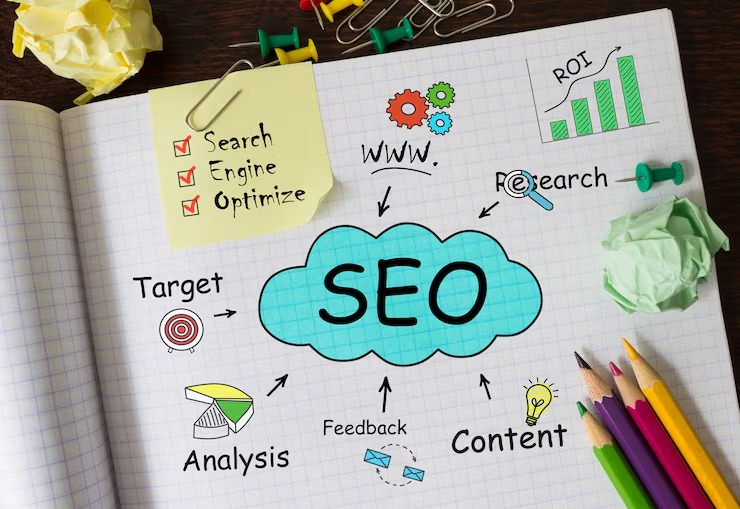
    Learning SEO Step by Step: The Complete Beginner’s Roadmap

    When I first started learning SEO, I was overwhelmed. Every article, video, and course seemed to throw around jargon like “backlinks,” “crawlers,” “meta tags,” and “domain authority.” It felt like learning a new language. But over time, I discovered that SEO doesn’t have to be intimidating—it’s simply about helping search engines and users understand your content.

    In this guide, I’ll walk you through the exact steps I took to learn SEO from scratch. This roadmap is practical, beginner-friendly, and built on actions you can take today. By the end, you’ll know how to approach SEO in a structured way without feeling lost.

    Step 1: Understand What SEO Really Is

    At its core, SEO (Search Engine Optimization) is about making your website visible in search engines like Google, Bing, and Yahoo. When someone searches for something, search engines want to provide the most relevant, trustworthy, and helpful results. Your job is to make your website one of those results.

    I remember when I realized SEO wasn’t just about “tricking Google.” It’s really about creating a great experience for people—fast, relevant, and easy to navigate content that answers their questions. Once I understood this, SEO became much less complicated.

    Step 2: Learn the Three Pillars of SEO

    There are three main areas of SEO you need to master:

    1. On-Page SEO – Optimizing your website content, titles, headings, keywords, and meta descriptions.
    2. Technical SEO – Ensuring your site is crawlable, fast, mobile-friendly, and structured properly.
    3. Off-Page SEO – Building authority through backlinks, mentions, and trust signals.

    When I started, I tried to learn everything at once and got stuck. Instead, I recommend focusing on one pillar at a time. For beginners, start with On-Page SEO because it’s the easiest to control.

    Step 3: Research Keywords the Right Way

    Keywords are the foundation of SEO. They are the words and phrases people type into Google. Without understanding what your audience searches for, your content won’t get discovered.

    When I first researched keywords, I made the mistake of targeting broad terms like “fitness” or “insurance.” Competing with huge websites was impossible. Instead, I learned to focus on long-tail keywords—specific phrases like “best yoga stretches for lower back pain.” These are easier to rank for and more likely to convert.

    Here’s what I do when researching keywords:

    • Use free tools like Google Keyword Planner or Ubersuggest.
    • Look at “People Also Ask” and “Related Searches” on Google.
    • Focus on search intent: What problem is the person trying to solve?

    Step 4: Create Content That Deserves to Rank

    SEO without quality content is useless. I used to write short, generic posts stuffed with keywords, and they never ranked. Once I started creating in-depth, actionable content, I saw real results.

    Here’s the formula I follow:

    • Write comprehensive articles that answer every part of the question.
    • Use headings (H2, H3) to break up text for readability.
    • Add examples, images, or step-by-step instructions.
    • End with a clear call to action.

    For example, if I write about “how to start a blog,” I don’t just explain the basics. I cover choosing a niche, buying a domain, setting up hosting, writing content, and promoting posts. The more complete my article, the better it performs.

    Step 5: Optimize On-Page Elements

    On-page SEO is about fine-tuning your content so both search engines and readers love it. I treat it like polishing my work before hitting publish. Here’s my checklist:

    • Include the target keyword in the title, first paragraph, and headings.
    • Write a compelling meta description to increase clicks.
    • Use internal links to connect related pages on my site.
    • Optimize URLs (short and descriptive, e.g., /seo-roadmap instead of /article123).
    • Add alt text to images for accessibility and search visibility.

    When I started applying these small tweaks, my pages began ranking higher without extra promotion.

    Step 6: Learn the Basics of Technical SEO

    I’ll be honest—technical SEO used to scare me. It sounded like coding and server setups, which I had no clue about. But once I broke it down, I realized beginners only need to focus on a few basics:

    • Make sure your site loads fast (use tools like Google PageSpeed Insights).
    • Ensure it’s mobile-friendly since most users browse on phones.
    • Submit a sitemap to Google Search Console.
    • Fix broken links and avoid duplicate content.

    I set up Google Search Console early, and it became my best teacher. It showed me what keywords I was ranking for and alerted me to technical issues I needed to fix.

    Step 7: Build Authority with Backlinks

    Even if you have great content, you’ll need backlinks—links from other websites pointing to yours. Search engines see backlinks as “votes of confidence.”

    At first, I struggled to get backlinks because I thought people would magically link to my site. That rarely happens. Instead, I began reaching out. I wrote guest posts, built relationships with other bloggers, and shared useful resources that people wanted to reference.

    One of my favorite tactics is creating “linkable assets,” like guides, infographics, or statistics. These naturally attract backlinks because they’re useful references.

    Step 8: Track and Improve Results

    SEO is not a one-time task. I learned quickly that it’s an ongoing process of testing and refining. Tools like Google Analytics and Google Search Console help me track traffic, rankings, and click-through rates.

    I make it a habit to check:

    • Which keywords bring me the most traffic.
    • Which pages people spend the most time on.
    • Where I’m losing visitors (high bounce rate).

    Based on this data, I update old posts, improve headlines, and add fresh insights. Every time I revisit a post, its rankings improve.

    Step 9: Stay Updated Without Getting Overwhelmed

    SEO changes constantly. New algorithm updates, AI-driven search, and evolving user behavior keep shifting the landscape. Early on, I tried to follow every piece of SEO news and got overwhelmed.

    Now I stick to a few trusted sources like Moz, Ahrefs, and Google’s official blog. I focus on fundamentals that don’t change: great content, good user experience, and building authority. This keeps me consistent without chasing every trend.

    Step 10: Practice, Practice, Practice

    The best way to learn SEO is by doing it. I wasted months reading before I actually applied anything. Once I created my own blog and experimented, everything started making sense.

    I recommend starting with a small project—a blog, a niche website, or even optimizing your LinkedIn profile. Don’t wait for perfection. Every mistake you make is part of the learning process.

    Final Thoughts

    When I look back at my SEO journey, I realize the biggest mistake I made was overcomplicating things. SEO isn’t about hacks or secrets. It’s about consistently creating valuable content, optimizing it for people and search engines, and building trust over time.

    If you’re just starting, follow this step-by-step roadmap:

    1. Understand SEO basics.
    2. Learn the three pillars.
    3. Master keyword research.
    4. Create content that deserves to rank.
    5. Optimize on-page elements.
    6. Fix technical SEO essentials.
    7. Build backlinks strategically.
    8. Track results and improve.
    9. Stay updated wisely.
    10. Keep practicing.

    With patience and persistence, you’ll see results. SEO is a long game, but the payoff is worth it. I’m living proof—what once felt confusing is now a skill that drives traffic, builds authority, and opens doors to endless opportunities. Choosing the right strategies or even investing in Pro SEO packages can help speed up the process while keeping your efforts focused on long-term success.

  • SEO Keywords Explained: How to Find and Use Them Effectively

    SEO Keywords Explained: How to Find and Use Them Effectively

    When I first started learning SEO, the concept of “keywords” felt both exciting and overwhelming. I quickly realized that keywords are not just words you throw into your content — they’re the backbone of how search engines connect people to information. In this article, I want to share what I’ve learned about SEO keywords, how I find them, and most importantly, how I use them effectively to drive real results.

    What Are SEO Keywords?

    In simple terms, SEO keywords are the words and phrases people type into Google (or any search engine) when they’re looking for something. For example, if someone searches “best coffee shops in New York,” then that entire phrase is a keyword.

    When I create content, keywords help me understand my audience’s intent. Are they trying to learn something, buy something, or compare options? Once I know their intent, I can create content that matches it.

    I think of keywords as a bridge: on one side are people searching, and on the other side is my content. If I choose the right keywords, I build a strong bridge that connects them directly to me.

    Why Keywords Matter in SEO

    I used to believe that simply writing good content would be enough for people to find me online. While quality matters, it’s not enough. Without keywords, my content had no direction — it wasn’t aligned with what people were actually searching for.

    Keywords matter because:

    • They help search engines understand what my page is about.
    • They connect my content to real people’s needs and questions.
    • They allow me to target audiences at different stages of the buying journey.

    When I learned to use keywords strategically, my content began ranking higher, my traffic grew, and I started seeing measurable results.

    How I Find SEO Keywords

    Finding the right keywords is where the real work begins. Over time, I’ve developed a simple but effective process.

    1. Start With Brainstorming

    I begin by thinking like my audience. If I were in their shoes, what would I type into Google? I write down as many ideas as possible — questions, problems, or topics related to my niche.

    For example, when I was writing about fitness, I brainstormed terms like “best workout for beginners,” “home gym equipment,” and “lose weight fast.”

    2. Use Keyword Research Tools

    Next, I turn to keyword research tools. My favorites are:

    • Google Keyword Planner – free and great for volume estimates.
    • Ahrefs or SEMrush – powerful tools for competition analysis.
    • Ubersuggest – beginner-friendly and budget-friendly.

    These tools show me search volume (how many people search for a keyword each month) and keyword difficulty (how hard it is to rank).

    3. Look for Long-Tail Keywords

    I’ve had the most success with long-tail keywords — phrases that are longer and more specific. For example, instead of “shoes,” I might target “comfortable running shoes for flat feet.”

    These may have lower search volume, but they attract people who are ready to take action. Plus, they’re usually easier to rank for.

    4. Analyze the Competition

    Before committing to a keyword, I check who’s ranking on the first page. If the results are dominated by big brands, it may be tough to compete. But if I see smaller websites, forums, or blogs ranking, I know I have a shot.

    5. Consider Search Intent

    Search intent changed how I think about keywords. People usually search with one of three goals:

    • Informational: They want to learn something. (e.g., “how to brew coffee”)
    • Navigational: They want to find a specific website. (e.g., “Starbucks near me”)
    • Transactional: They want to buy something. (e.g., “buy organic coffee beans online”)

    I always match my content to the intent. Writing a buying guide for an informational query won’t work — but answering their question will.

    How I Use Keywords Effectively

    Once I’ve chosen my keywords, the next step is to use them properly. When I started, I made the rookie mistake of “keyword stuffing,” cramming my keywords into every sentence. Not only did it sound unnatural, but search engines penalize that practice.

    Here’s what I do now:

    1. Place Keywords Strategically

    I include my main keyword in:

    • The page title
    • The URL
    • The meta description
    • The first 100 words of my content
    • At least one subheading (H2 or H3)
    • A few times naturally throughout the text

    This way, search engines clearly understand what my page is about, without overdoing it.

    2. Use Related Keywords (LSI)

    I also include variations and related terms. For example, if my keyword is “SEO keywords,” I might also use “keyword research,” “search terms,” or “target keywords.”

    This makes my content richer and helps me rank for multiple related searches.

    3. Write for Humans First

    I remind myself that my audience isn’t a robot. My job is to create helpful, engaging content that answers their questions. If the content flows naturally, the keywords fit seamlessly.

    4. Optimize for Voice Search

    With the rise of Siri, Alexa, and Google Assistant, I’ve started optimizing for voice search. That means using natural, conversational phrases like “What are the best ways to find SEO keywords?”

    5. Monitor and Adjust

    SEO isn’t a one-time task. I track how my content performs using Google Search Console. If I see certain keywords bringing traffic, I double down. If something isn’t working, I adjust my strategy.

    Common Mistakes I Avoid

    Through trial and error, I’ve made my share of mistakes. Here are a few I now steer clear of:

    • Ignoring intent – writing the wrong type of content for a keyword.
    • Targeting only high-volume keywords – too competitive and often too broad.
    • Forgetting about users – focusing only on rankings, not usefulness.
    • Not updating content – keywords and trends change, so refreshing content keeps it relevant.

    My Keyword Strategy in Action

    To give you a real example, I once targeted the keyword “how to clean protein shaker bottles.” At first, I thought it was too specific. But after publishing a detailed guide, my article started ranking and bringing consistent traffic.

    Why? Because people actually search for very specific problems — and when I solved it clearly, my content stood out. That single keyword also led me to discover related terms like “best protein shaker cleaning brush” and “remove odor from shaker bottle,” which gave me even more opportunities to rank.

    Final Thoughts

    Learning to find and use SEO keywords effectively transformed the way I create content. Instead of guessing what people want, I now have a data-driven roadmap. Keywords tell me what my audience is thinking, what they need, and how I can help.

    If you’re just starting, don’t be intimidated. Begin with brainstorming, use free tools, and pay attention to search intent. Focus on creating genuinely helpful content, and let keywords guide you, not control you.

    The more I practice keyword research, the more I see SEO not as a trick to “game the system,” but as a way to connect meaningfully with the right people. And that, in my experience, is the true power of keywords. For those ready to take it a step further, investing in Pro SEO packages can provide advanced strategies and save time while still keeping the focus on meaningful connections.

  • SEO Link Building Basics: A Beginner’s Guide

    SEO Link Building Basics: A Beginner’s Guide

    When I first started learning about SEO, I quickly realized that link building was one of the most talked-about and misunderstood topics. Some people made it sound like an easy shortcut to rankings, while others warned it could ruin a site if done wrong. Over time, I’ve discovered that link building is neither a magic trick nor a dangerous gamble—it’s a strategic process that, when done right, creates long-term benefits for any website. In this guide, I want to share the basics of SEO link building from my perspective as someone who had to learn it step by step.

    What Is Link Building and Why Does It Matter?

    At its core, link building is about earning hyperlinks from other websites that point back to your own. Think of each link as a vote of trust. When a reputable site links to you, it signals to search engines like Google that your content is valuable and credible.

    I learned early on that not all links are equal. A link from a high-authority site in your niche carries more weight than dozens of random links from unrelated blogs. This is why quality always beats quantity in link building. The goal isn’t just to collect as many links as possible—it’s to attract the right links that help your site grow.

    How I Started with Link Building

    When I was a beginner, the whole process felt overwhelming. I didn’t know where to start, so I broke it down into simple steps:

    1. Understanding my niche – I researched what kind of content my target audience was searching for and what websites they trusted.
    2. Creating link-worthy content – Before asking for links, I needed something worth linking to, such as guides, how-to posts, or original insights.
    3. Reaching out strategically – I realized that building relationships with other site owners mattered more than sending cold emails to strangers.

    This simple approach helped me build a foundation for link building without getting lost in advanced tactics.

    Types of Links That Work Best

    Over time, I discovered that different types of links provide different levels of value. Here are the ones that have consistently worked for me:

    • Editorial Links – These are natural links that come when another site references my content because it’s genuinely useful. They’re the gold standard.
    • Guest Post Links – By writing high-quality articles for other sites in my industry, I’ve earned backlinks while also growing my visibility.
    • Resource Links – I created resource pages, tools, or helpful lists that other sites found useful enough to link to.
    • Business and Directory Links – Listing my business on reputable directories gave me local SEO benefits and credibility.

    Each type of link played a role, but editorial links and guest posts gave me the biggest boost.

    The Right and Wrong Ways to Build Links

    When I first researched link building, I came across a lot of shady tactics—buying links, participating in link farms, or spamming blog comments. These shortcuts might deliver quick wins, but they almost always backfire. Google is smart enough to detect manipulative link-building practices, and I didn’t want to risk penalties.

    Instead, I focused on the right way:

    • Providing value first.
    • Building relationships with site owners.
    • Creating original, well-researched, and helpful content.

    One lesson I learned the hard way is that link building isn’t about tricking search engines—it’s about proving your site deserves to rank.

    Actionable Link Building Strategies for Beginners

    If I had to start all over again, here are the exact strategies I’d use as a beginner:

    1. Guest Posting

    I reached out to websites in my niche and offered to contribute articles. My approach was simple: I pitched topics that filled gaps in their existing content and made sure the articles were well-written. The backlinks I earned felt natural and valuable.

    2. Broken Link Building

    I used tools to find broken links on relevant websites. When I spotted a dead link, I politely reached out to the webmaster and suggested my content as a replacement. It helped both of us—they fixed a broken link, and I earned a backlink.

    3. Creating Evergreen Resources

    I invested time in writing comprehensive guides and resources. For example, I once created a step-by-step tutorial that became a go-to reference in my niche. Over time, other websites linked to it naturally.

    4. Leveraging Social Proof

    I shared my work on social media and tagged relevant experts. Sometimes, they reshared it or even linked to it from their own websites. This small effort opened doors I wouldn’t have expected.

    5. Building Relationships

    Networking with other bloggers, business owners, and industry professionals was one of the smartest things I did. Many of my best backlinks came not from cold outreach but from genuine connections I built over time.

    Common Mistakes I Avoided

    I’ve seen many beginners fall into traps with link building. To save you the same trouble, here are mistakes I made sure to avoid:

    • Chasing quantity over quality – 100 low-value links won’t match the power of one strong link from an authority site.
    • Over-optimizing anchor text – Using the same keyword-heavy link repeatedly can look spammy. I kept it natural.
    • Ignoring relevance – A link from an unrelated site won’t help much. Relevance is just as important as authority.
    • Neglecting relationships – Thinking link building is just a numbers game is a mistake. Relationships drive real results.

    How I Measured My Progress

    Tracking progress was essential for me. I used tools like Google Search Console and backlink analysis tools to check which sites were linking to me. I also tracked my keyword rankings and organic traffic. Every time I saw a boost, I connected it back to new links I had earned.

    This feedback loop helped me refine my strategy—doubling down on what worked and dropping what didn’t.

    My Biggest Takeaway

    After years of trial and error, I’ve realized that SEO link building is not about quick hacks. It’s about consistent effort, creating valuable content, and building trust within your niche. The more value I gave to others—through content, collaborations, or outreach—the more links I earned naturally.

    If you’re just getting started, my advice is simple: focus on learning, building relationships, and creating content that deserves links. Over time, your site will grow stronger, and your rankings will improve.

    Final Thoughts

    Looking back, I’m glad I didn’t chase shortcuts. Building links the right way has given me not just better SEO results, but also stronger connections with people in my industry. If you’re a beginner, start small, stay consistent, and remember that quality always wins over quantity.

    SEO link building may seem intimidating at first, but once you understand the basics and practice consistently, it becomes one of the most rewarding parts of growing your online presence. Investing in pro SEO packages can also help streamline your efforts, giving you the right tools and strategies to scale effectively.


  • How Do Pro SEO Packages Align with Google’s Latest Updates?

    How Do Pro SEO Packages Align with Google’s Latest Updates?

    When I first started diving deep into search engine optimization (SEO), one thing quickly became clear—Google doesn’t sit still. The search giant updates its algorithm thousands of times each year, and every change can significantly impact a website’s visibility. As someone invested in organic growth, I realized that staying ahead of these changes wasn’t just beneficial—it was essential.

    That’s where Pro SEO Packages come in. I’ve used these services not just to grow traffic but to future-proof my site against Google’s frequent changes. In this blog, I want to share how Pro SEO Packages align with Google’s latest updates and why they might be the smart choice if you’re serious about sustainable online visibility.

    Understanding Google’s Ever-Changing Algorithm

    Before I dive into how Pro SEO Packages respond to Google updates, let’s set the context.

    Google’s core mission is to provide users with the most relevant and high-quality search results. Every algorithm update is designed to better serve that goal. Whether it’s the Helpful Content Update, SpamBrain, or the infamous Core Web Vitals, Google keeps refining its system to reward genuinely useful content and penalize manipulative practices.

    These changes aren’t superficial. I’ve seen rankings drop overnight when a site fails to adapt. That’s why any SEO strategy that doesn’t account for Google’s evolution is basically building on quicksand.

    1. Pro SEO Packages Focus on E-E-A-T Principles

    One of the biggest shifts in Google’s algorithm is the emphasis on E-E-A-T—Experience, Expertise, Authoritativeness, and Trustworthiness.

    When I began optimizing content through a Pro SEO Package, I noticed a strong focus on author bios, original research, customer testimonials, and verified credentials. Why? Because these packages are built to enhance trust signals, not just sprinkle keywords.

    By regularly updating content to reflect new data, citing credible sources, and adding authentic voices, Pro SEO teams help ensure that my site aligns with what Google now prioritizes: real people offering real value.

    2. Content Quality Over Quantity

    Gone are the days when publishing dozens of shallow blog posts could game the system. Google’s Helpful Content Update completely changed the rules.

    What I like about Pro SEO Packages is how they emphasize quality content strategy. Instead of pushing me to churn out 20 posts a month, the SEO experts I work with focus on comprehensive, actionable, user-focused content.

    They audit every page for relevancy, ensure articles are updated with the latest facts, and even restructure older content for better readability and engagement. The result? Higher dwell time and lower bounce rates—which Google loves.

    3. Technical SEO That Meets Google’s Standards

    One of the biggest wake-up calls for me was realizing how much technical SEO matters.

    When Google introduced Core Web Vitals, I knew that page load time, mobile usability, and visual stability weren’t optional—they were ranking factors. With Pro SEO Packages, I gained access to developers and technical experts who optimized my site’s back-end.

    Here’s what they did:

    • Improved page speed by compressing images and minifying CSS/JS
    • Enabled lazy loading and browser caching
    • Fixed broken links and crawl errors
    • Ensured a mobile-responsive design across all pages

    All of this not only aligned my site with Google’s latest technical benchmarks but also enhanced the user experience—another huge win.

    4. Strategic Link Building Without Triggering Penalties

    Link building is tricky. If you do it wrong, Google penalizes you. If you ignore it, you lose authority.

    Pro SEO Packages helped me walk this tightrope with confidence. Instead of shady tactics like buying links or using spammy directories, the team focused on earning backlinks from high-authority, relevant websites.

    Guest posting, digital PR, niche collaborations, and content syndication were all part of the strategy. Each link was white-hat and added genuine value, keeping my backlink profile clean and compliant with Google’s link spam updates.

    5. Real-Time Monitoring & Rapid Response

    Google doesn’t warn you before rolling out an update. One morning you might find your traffic tanking. That’s why I appreciate the real-time monitoring built into Pro SEO Packages.

    With advanced analytics tools, the SEO team constantly tracks:

    • Keyword rankings
    • Organic traffic patterns
    • Core Web Vital metrics
    • Bounce rates and session durations

    When a new update drops, they don’t panic—they pivot. I’ve seen them refresh underperforming pages, shift keyword focus, and adjust on-page SEO within days. That agility has saved me from losing visibility during several major algorithm shifts.

    6. Local SEO and Personalization Compatibility

    As Google doubles down on personalization and location-based results, Local SEO has become even more relevant.

    With Pro SEO Packages, I received tailored strategies for local optimization—things like:

    • Optimizing my Google Business Profile
    • Encouraging and managing customer reviews
    • Building local citations
    • Creating geo-targeted landing pages

    This alignment with Google’s local search ranking factors helped me dominate “near me” searches and appear in the coveted local 3-pack, especially after updates that refined proximity and relevancy signals.

    7. AI and Content Authenticity Checks

    Another thing I noticed is Google’s pushback against AI-generated, low-quality content. Some of my peers learned the hard way that “fast content” isn’t always good content.

    My Pro SEO Package includes content audits that check for originality, tone, and human-like depth. While I use tools for efficiency, the final product always gets reviewed by real writers and editors. This approach aligns with Google’s goal of promoting content that reflects human insight and adds real value to users.

    8. Structured Data and Rich Results

    Google’s latest updates increasingly favor structured data. Whether it’s recipe cards, FAQs, event listings, or product information, adding schema markup increases visibility in SERPs.

    Pro SEO Packages took this a step further. They implemented schema on relevant pages and tested them using Google’s Rich Results Test tool. The result? My content started appearing in featured snippets, FAQ sections, and even voice search results.

    Final Thoughts

    If you’re asking, “How do Pro SEO Packages align with Google’s latest updates?”—my answer is simple: they’re built to.

    I’ve experienced first-hand how these packages adapt to evolving ranking factors by focusing on quality, compliance, and long-term strategy. While no SEO tactic guarantees rankings overnight, aligning with Google’s algorithm is the only sustainable way to build visibility—and Pro SEO Packages do exactly that.

    In a world where Google’s rules change constantly, I’d rather invest in a strategy that evolves with it than play catch-up every few months. That’s what these packages offer—stability, adaptability, and real results.


  • How Can Pro SEO Packages Increase Organic Traffic Quickly?

    How Can Pro SEO Packages Increase Organic Traffic Quickly?

    As a digital marketer who’s spent years experimenting, failing, learning, and finally succeeding with SEO strategies, I can confidently say one thing—Pro SEO packages work. But not all are created equal.

    If you’re a business owner or marketing manager asking, “How can Pro SEO packages increase organic traffic quickly?”—I’m here to walk you through what I’ve seen work firsthand.

    Let’s dive deep into the why, how, and what to expect when you invest in Pro SEO services.

    The Day I Realized I Needed Help

    When I started managing the SEO for my first e-commerce brand, I was a DIY junkie. I read every blog, followed every “guru,” and tried every free tool out there. My traffic moved, yes—but at a snail’s pace.

    That’s when I bit the bullet and invested in a Pro SEO package from a reputable agency.

    Within three months, my organic traffic had doubled. Not from paid ads. Not from social media. Just smart, focused, white-hat SEO strategies—done by professionals.

    What Exactly Is a Pro SEO Package?

    A Pro SEO package is a complete service bundle offered by experienced SEO agencies or freelancers. It goes way beyond keyword stuffing or creating a few backlinks. Instead, it provides a multi-layered approach to optimizing your website for search engines and users.

    Typical features include:

    • Technical SEO audit and fixes
    • Keyword research and content strategy
    • On-page SEO optimization
    • Off-page SEO (quality link building)
    • Blog content writing and optimization
    • Competitor analysis
    • Local SEO (if applicable)
    • Monthly reporting and analytics

    Each of these elements plays a role in helping your site rank faster and better.

    How Pro SEO Packages Help Increase Organic Traffic Quickly

    1. Quick Wins from Technical Fixes

    The first thing my SEO team tackled was the technical mess on my site. Broken links, missing alt tags, slow page speed, poor mobile usability—you name it.

    These quick fixes had a massive impact within weeks. Google started crawling my pages more frequently and ranking them higher simply because they became easier to access and index.

    2. High-Impact Keyword Targeting

    Before the Pro package, I was targeting keywords like “shoes for men.” Huge mistake. I was up against Amazon, Zappos, and Nike. My Pro SEO team did detailed keyword research and found long-tail variations like:

    • “affordable casual shoes for men under $50”
    • “breathable men’s sneakers for walking”

    Within a month, I started ranking on page one for several of these. The traffic increase was noticeable, and more importantly—it converted.

    3. Strategic Content Creation

    You’ve heard “content is king.” But content without strategy is just noise.

    My SEO agency rolled out a monthly content calendar, optimized each blog for specific keywords, added internal links, and shared it on platforms that brought in targeted readers. The content wasn’t just fluff; it answered real customer questions and got picked up by Google’s featured snippets.

    4. Authoritative Link Building

    I’d tried buying backlinks before. Big mistake. They were spammy and hurt my rankings.

    With the Pro SEO package, I got real backlinks from authority websites in my niche. This was a game changer. Just a few high-authority links gave my domain a trust boost, pushing several pages up in search rankings quickly.

    5. Regular Tracking and Tweaking

    SEO is not set-it-and-forget-it. What worked last month might not work next month.

    That’s why I appreciated the monthly reports and strategy calls. The SEO pros adjusted the tactics based on performance data. They tracked bounce rate, dwell time, conversion rate—not just rankings. This ongoing refinement helped sustain traffic growth and conversions.

    How Fast Can You Expect Results?

    Here’s the truth: Quick doesn’t mean overnight.

    But in my experience, with the right Pro SEO package, you can start seeing results in 30 to 90 days, especially if:

    • Your site has been live for a while
    • You have existing content that can be optimized
    • You’re in a moderately competitive niche
    • You’re open to collaboration

    If you’re starting from scratch, it might take a bit longer. But the compounding benefits make it worth every penny.

    What to Watch Out For

    Not all SEO packages are created equal. Some things to avoid:

    • Guaranteed #1 rankings – Nobody can promise that.
    • Low-cost packages – These often use black-hat tactics that can get you penalized.
    • No reporting – If they’re not showing you the data, they’re hiding something.
    • No customization – Every site is different. SEO isn’t one-size-fits-all.

    Make sure the SEO provider offers transparency, customization, and ethical practices.

    My Advice Before You Invest

    Here’s what I recommend if you’re seriously considering a Pro SEO package:

    1. Set clear goals – Is it traffic, leads, conversions, or all of the above?
    2. Do a site audit first – Know where you stand.
    3. Have some patience – The first few weeks might feel slow. But the right strategies gain momentum.
    4. Collaborate with your team – The more input you give (your brand story, customer needs, product info), the better the content and keywords.
    5. Stick to white-hat SEO – The long game always wins.

    The Bottom Line

    I was skeptical too. Spending hundreds or thousands on SEO felt like a gamble. But once I saw the organic traffic surge, and more importantly, conversions grow without constant ad spend, I realized I was building a long-term digital asset.

    If you’re struggling with stagnant traffic or watching competitors outrank you every time, don’t wait another six months to “figure it out.”


  • How to Maximize ROI from Your Investment in Pro SEO Packages

    How to Maximize ROI from Your Investment in Pro SEO Packages

    When I first decided to invest in a professional SEO package, I thought it would be as simple as hiring an agency, letting them work their magic, and watching the traffic roll in. I quickly realized that while SEO is powerful, your return on investment (ROI) largely depends on how strategically you manage it. Just buying a “Pro SEO Package” isn’t enough. You need to actively participate, track results, and continuously align your SEO goals with your business objectives.

    After months of learning (and making mistakes), I’m sharing the steps I took to truly maximize ROI from my SEO investment. If you’ve bought—or are planning to buy—a Pro SEO package, here’s how you can get the most out of every dollar.

    1. Start with Clear, Measurable Goals

    When I began, I just wanted “more traffic.” But SEO success isn’t just about traffic volume. It’s about relevant traffic that converts. To boost ROI, I had to narrow down my goals:

    • Do I want to increase leads?
    • Do I want to boost sales on a specific product?
    • Do I need more local visibility?
    • Am I trying to rank higher for branded keywords?

    Once I defined my objectives, my SEO provider and I could tailor a strategy that focused on conversions, not just rankings.

    2. Choose the Right SEO Partner—Not Just the Cheapest

    I’ve learned that not all Pro SEO packages are created equal. Some are packed with automated link building, vague reporting, and black-hat shortcuts that can backfire. Others are structured, transparent, and results-driven. I made the mistake of choosing a low-cost option first, but I got what I paid for: minimal results and generic support.

    The SEO provider I finally partnered with:

    • Provided customized strategies based on my niche
    • Offered regular updates and transparent reporting
    • Took time to understand my brand voice and customer intent

    A higher upfront cost led to much better ROI over time.

    3. Participate Actively in the Strategy

    At first, I thought SEO was something I could hand off completely. But real results came when I stayed involved. I began joining strategy calls, sharing customer feedback, and helping generate blog topics and FAQs.

    Here’s what I contributed that made a difference:

    • Shared real customer pain points for content topics
    • Provided insights into seasonal sales trends
    • Gave product knowledge that the agency couldn’t know
    • Helped tweak meta descriptions to match my tone

    The more I collaborated, the more aligned our SEO output became with my business vision.

    4. Audit Your Website Before You Scale

    No matter how powerful your Pro SEO package is, a slow, broken, or poorly structured website will sabotage your results. I invested in a technical SEO audit right at the start and it uncovered issues I didn’t even know existed—like broken links, duplicate content, poor mobile responsiveness, and a sluggish page speed.

    After fixing these problems, I noticed a boost in organic traffic within a few weeks—before we even ramped up content or backlink campaigns. Lesson learned: clean house before you decorate.

    5. Content Is King—But Only If It’s Useful

    One of the biggest changes I made was shifting from “content for content’s sake” to content that truly helped users. My initial SEO plan included generic 500-word blog posts. They weren’t bad, but they didn’t perform.

    Then we pivoted to:

    • In-depth how-to guides
    • Industry-specific case studies
    • Expert interviews
    • Localized landing pages

    I even started writing some of the content myself and blending my real-world experience with data-driven SEO. The bounce rates dropped. Time on page increased. Conversions improved. That’s ROI in action.

    6. Track the Right Metrics (Not Just Rankings)

    I used to obsess over my Google rankings. Don’t get me wrong—they matter—but what really matters is what those rankings lead to. To evaluate my true ROI, I started tracking:

    • Organic traffic to high-converting pages
    • Cost per lead from SEO vs paid ads
    • Keyword rankings for buying intent terms
    • Conversions and sales originating from organic visits

    Using tools like Google Analytics, Search Console, and UTM tracking helped me connect the dots. I wasn’t just “ranking #1”; I was making more sales.

    7. Don’t Ignore Local SEO (Even If You’re Online-Only)

    One of the best ROI boosters for me came from local SEO, even though I mainly sold online. Google’s local results and maps get tons of attention and trust. Once I optimized my Google Business Profile, got local backlinks, and added location-based landing pages, I saw a spike in regional conversions.

    If you have a physical location, local SEO is a must. If you don’t, you can still target local searchers based on your delivery area or service region.

    8. Build Quality Backlinks Over Quantity

    Backlinks are a core part of any Pro SEO package. But not all links are good. I worked with my provider to focus only on high-authority, relevant, and editorially placed links.

    We earned links through:

    • Guest posting on niche websites
    • Being cited as a source in news stories
    • Publishing original research
    • Participating in expert roundups

    These links not only boosted my SEO performance but also brought referral traffic—another channel for ROI.

    9. Adapt and Evolve Based on Data

    SEO is not “set it and forget it.” Algorithms change, industries evolve, and customer behavior shifts. Every quarter, I sit down with my SEO partner to review what’s working and what’s not.

    We’ve paused underperforming content strategies, doubled down on successful ones, and updated our keyword targeting based on market trends. These regular tune-ups ensure my investment keeps delivering results over time.

    10. Be Patient—But Not Passive

    Finally, the toughest truth: SEO takes time. I didn’t see huge results in the first 30 days. But within three months, I noticed growth. By six months, it was clear this was one of my best marketing investments.

    I stayed patient—but I wasn’t passive. I kept refining, measuring, collaborating, and testing. And because I treated SEO as a long-term strategy—not a quick fix—I’m now seeing steady, compounding returns month after month.

    Final Thoughts

    Investing in a Pro SEO package can be a game-changer—but only if you treat it like a partnership, not a transaction. Maximize your ROI by setting clear goals, choosing the right provider, staying engaged, and tracking meaningful results.

    I can confidently say that SEO helped me grow my business sustainably and cost-effectively. And if you’re willing to do the work beyond just paying for a package, you’ll see that return multiply.


  • How Do Pro SEO Packages Help Local SEO for Small Businesses Grow Fast?

    How Do Pro SEO Packages Help Local SEO for Small Businesses Grow Fast?

    As a small business owner, I’ve learned that surviving in today’s digital landscape takes more than a great product or service—it requires visibility. When I first launched my business, I struggled to get noticed online, even though my offerings were solid. That’s when I discovered the power of Pro SEO packages—and more specifically, how they transform local SEO into a growth engine for small businesses like mine.

    Let me walk you through my journey and show you exactly how Pro SEO packages helped my local business grow faster than I ever expected.

    Understanding the Basics: What Is a Pro SEO Package?

    A Pro SEO package is essentially a bundle of advanced search engine optimization services. Unlike basic SEO plans, Pro packages typically include a comprehensive range of tools and strategies—like on-page SEO, local keyword optimization, technical fixes, backlink building, and performance analytics—all designed to boost visibility and drive targeted traffic.

    For me, the game-changer was how these services worked together to help my business show up in local search results, like when someone searched “best bakery near me” or “custom cakes in [my city].” That’s local SEO in action.

    Why Local SEO Matters for Small Businesses

    Before I invested in SEO, my biggest challenge was attracting local customers. I relied on word-of-mouth and social media posts, but my growth hit a plateau.

    Once I understood what local SEO could do, everything changed. Local SEO helps small businesses:

    • Appear on Google Maps
    • Rank higher for city- or neighborhood-based searches
    • Get featured in “local pack” listings
    • Build credibility with positive reviews

    I realized that if I wasn’t optimizing for these local opportunities, I was missing out on customers right in my area. That’s where the Pro SEO package stepped in.

    How Pro SEO Packages Supercharged My Local SEO

    1. In-Depth Keyword Research Targeting Local Audiences

    A good Pro SEO package doesn’t just throw in random keywords—it focuses on high-intent, geo-targeted keywords that your actual customers are searching for. My SEO team found phrases like “affordable wedding cakes in Springfield” and “custom birthday cupcakes near downtown” that I had never thought to include on my website.

    These keywords became the foundation of my content strategy, and suddenly I started ranking for local searches that actually led to calls and orders.

    2. On-Page Optimization That Speaks to Local Needs

    It wasn’t enough to stuff local keywords into my pages. My Pro SEO team helped optimize my headings, meta descriptions, image alt texts, and internal links—all with my local audience in mind.

    They also added schema markup to make my address, phone number, and hours more visible to search engines. I even got featured in Google’s local listings faster than I expected.

    3. Google Business Profile Optimization

    This was one of the most impactful features in the package. My Pro SEO provider claimed, verified, and optimized my Google Business Profile (formerly Google My Business). They:

    • Updated my business info consistently across platforms
    • Added high-quality photos
    • Responded to reviews
    • Posted weekly updates and promotions

    As a result, my business started showing up in the Google Map Pack—one of the top three listings shown under the map for local searches. That alone brought in a huge spike in foot traffic.

    4. Reputation Management and Local Reviews

    Another element of the Pro SEO package was helping me manage customer reviews. They didn’t just ask for reviews—they built a system to encourage satisfied customers to leave reviews across Google, Yelp, and niche directories.

    More five-star reviews meant more trust, which meant more clicks—and it also positively affected my rankings. Google loves trustworthy businesses, and my online reputation improved dramatically within a few months.

    5. High-Quality Local Backlinks

    Backlinks are still one of the most powerful SEO factors, but not just any backlinks—local backlinks. My Pro SEO team reached out to local bloggers, news sites, and directories to get my website featured.

    This told search engines that I was a relevant and trusted local business, and it pushed me even higher in the search results. It also introduced me to new customers I hadn’t previously reached through my own efforts.

    6. Content Creation That Resonates Locally

    Pro SEO packages often include content writing—and in my case, they wrote blog posts, FAQs, and landing pages that spoke directly to my local market.

    Topics like “5 Best Places for Birthday Parties in Springfield” or “How to Choose the Perfect Cake in Our Neighborhood” helped me connect with local readers, drive organic traffic, and establish myself as a local authority.

    7. Tracking and Continuous Improvement

    One of the best things about a Pro SEO package is that it’s not a “set it and forget it” deal. I received monthly reports with traffic numbers, keyword rankings, click-through rates, and conversion data.

    This helped me make informed decisions and tweak strategies as needed. If something wasn’t working, we’d pivot. If a certain page was gaining traction, we’d boost it with more content or a call-to-action.

    The Results: Tangible Growth, Fast

    Here’s what happened within six months of using a Pro SEO package for my local SEO:

    • Website traffic doubled
    • Phone inquiries increased by 60%
    • Orders through the website grew by 45%
    • I ranked in the top 3 for more than 20 local keywords
    • Google Maps views surged by over 75%

    Most importantly, I was finally reaching the customers who were actively looking for businesses like mine—and they were just around the corner.

    Final Thoughts: Is It Worth It?

    Absolutely. If you’re a small business owner wondering whether a Pro SEO package is worth the investment—my answer is yes. Local SEO is one of the most cost-effective ways to grow a business fast, especially when you’re targeting a specific geographic area.

    A Pro SEO package gave me the structure, strategy, and execution I needed to rise above the competition and become a visible, trusted business in my community.

    You don’t need a massive budget or a national reach to succeed online. You just need to be found by the right people, at the right time—and that’s exactly what Pro SEO packages help you achieve.


  • 6 Powerful Local SEO Tactics That Helped Me Dominate Search

    6 Powerful Local SEO Tactics That Helped Me Dominate Search

    When I first started trying to grow my local business online, I had no clue where to begin. I was overwhelmed with conflicting advice, jargon, and strategies that seemed better suited for massive corporations than a small, service-based business like mine. But I didn’t give up. I stuck with it, tested every tactic, and slowly built a system that now brings me new leads—day in and day out.

    If you’re new to local SEO, you’re in the right place. I’ve put together six tactics that worked for me and continue to help me rank higher in local searches. These strategies will not only improve your online visibility but also put you ahead of competitors who aren’t putting in the same effort.

    Let’s dive in.

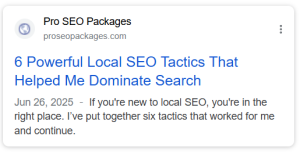
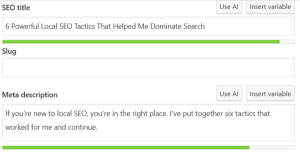
    1. Title and Description Tags: Still the Gatekeepers of Clicks

    Image Suggestion: A Google search result showing title and meta description snippets.

    One of the first SEO elements I optimized—before I even knew what SEO really meant—was my title and meta description tags. And I’m so glad I did.

    These are the snippets of text that show up in search results. Think of them as your online elevator pitch. They don’t just help Google understand your page; they help people decide whether to click.

    Here’s what I learned early on:

    • Titles should be concise (50–60 characters) and include a keyword along with your city or service area.
    • Descriptions can go up to 160–200 characters, and they should summarize the page in a compelling way.

    For example:
    Title: “Emergency HVAC Repairs | 24/7 Service in Cleveland”
    Description: “Need fast furnace repair in Cleveland? Our certified technicians are ready 24/7. Call now for local, reliable help.”

    I used tools like Yoast SEO to preview how these tags would look on both mobile and desktop. This helped me avoid getting cut off by ellipses (…), which often make your listing look incomplete or unprofessional.

    Pro tip: Put your main keyword near the beginning and don’t waste space on fluff like “Welcome to” or “Home.” Every character counts.

    Local SEO

    Local SEO

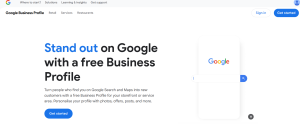
    2. Claim and Optimize Your Google Business Profile (GBP)

    Image Suggestion: Screenshot of a filled-out Google Business Profile dashboard.

    If I could only pick one strategy to recommend, this would be it. Claiming and optimizing my Google Business Profile (formerly Google My Business) was a turning point.

    Local SEO

    Here’s how I did it step-by-step:

    1. Claimed my business via google.com/business.
    2. Went through Google’s verification process (they mailed me a postcard with a code).
    3. Completed every section of the profile—categories, hours, business description, services, and Q&As.
    4. Uploaded photos and short videos of my work, my team, and my location.
    5. Posted regular updates like promos, events, and new services.

    The more complete your profile, the better you’ll show up in Google’s local 3-pack (those top 3 map results). It’s like having a free billboard at the top of Google.

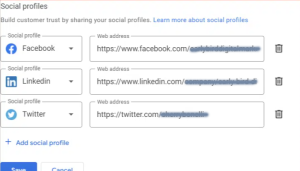
    Also, Google now allows adding social media links and even shows social media posts directly in your profile. Keeping your profile active tells Google you’re engaged and trustworthy.

    Local SEO

    3. Online Reviews Are Your Local Reputation

    Image Suggestion: Screenshot of a 5-star Google review with customer images.

    Online reviews have become the digital version of word-of-mouth—and they matter more than ever. I didn’t fully understand this at first, but after just a few 5-star reviews, my phone started ringing more.

    According to a recent BrightLocal survey, 84% of consumers trust online reviews as much as personal recommendations.

    How I Built My Review Strategy:

    • After every job, I personally ask the customer to leave a review.
    • I send a direct link to my Google Business Profile review page (you can generate this easily).
    • I also encourage them to leave reviews on Facebook or other platforms.

    And I always respond to reviews—good or bad. This shows I value feedback and take customer satisfaction seriously.

    Google has even confirmed that high-quality, positive reviews help with local rankings. They build trust, improve click-through rates, and often show up directly in search results.

    Don’t just ask once. Make review collection part of your daily process.


    4. Build Dedicated Service Pages for Each Offering

    Image Suggestion: Website screenshot with multiple service pages in the menu.

    This tactic was a game-changer for me. Originally, I lumped all my services into one generic “Our Services” page. But after some advice from an SEO-savvy friend, I broke out each offering into its own page.

    Now I have pages like:

    • /furnace-installation-columbus
    • /ac-repair-emergency-dayton
    • /duct-cleaning-cincinnati

    Why this works:

    • Google better understands what each page is about.
    • I can target different keywords on each page.
    • Each page ranks separately, giving me more chances to show up in search.

    Plus, these pages give me space to add FAQs, testimonials, service area details, and unique selling points.

    You don’t have to build them all at once. Do one each week. After a month, you’ll be ahead of 90% of your competitors.

    5. Online Directories and Consistent Citations

    Image Suggestion: Logos of popular directories (Yelp, linkedin, Facebook, etc.).

    Another powerful move? Getting my business listed on key online directories—accurately and consistently.

    Each listing (also known as a citation) should match your NAP exactly—Name, Address, Phone Number. Even a small discrepancy like “St.” vs. “Street” can confuse search engines.

    I submitted my info to:

    • Yelp
    • linkedin
    • Facebook
    • Goodfirms
    • Angi
    • Thumbtack
    • Local chamber directories
    • Industry-specific platforms

    I also used citation aggregators like Data Axle, Foursquare, and Neustar Localeze. These services distribute your info to hundreds of directories across the web.

    Don’t ignore this step. Citations send powerful trust signals to Google—and help potential customers find you even if they don’t search on Google.

    Pro tip: Use tools like BrightLocal or Moz Local to audit your listings and identify missing or inconsistent citations.

    6. Get Social and Stay Active

    Image Suggestion: A Facebook post showing customer engagement and behind-the-scenes content.

    Social media isn’t just for influencers. It’s a powerful tool for local businesses too—especially now that Google is starting to show social posts in Google Business Profiles.

    I started by choosing just two platforms where my audience was active—Facebook and Instagram. I post:

    • Behind-the-scenes photos
    • Team spotlights
    • Customer shoutouts
    • Promotions and local partnerships
    • Links to new blog posts or service pages

    Even just posting twice a week helped build familiarity with local customers. It also increased engagement on my Google profile, which led to better local rankings.

    Now, people who search for me on Google often click through to my Facebook page. They see the real people behind the business—and that builds trust.

    Bonus Tip: Combine These Strategies into One Cohesive Plan

    If you’ve made it this far, you’re already ahead of most local businesses. But don’t treat these tactics like isolated checkboxes. When done together, they work like a local SEO machine.

    Here’s how I tie it all together:

    • My Google Business Profile links to individual service pages on my website.
    • Those service pages are optimized with strong title and meta descriptions.
    • I collect reviews that mention specific services or locations—boosting those pages’ credibility.
    • I share those reviews and service highlights on social media, increasing local brand awareness.
    • I make sure my citations and NAP are correct across all directories, reinforcing trust signals.

    By integrating all these efforts, I created a solid, growing online presence that continues to drive results.

    Final Thoughts: Start Where You Are—But Start Today

    I get it—local SEO can seem overwhelming. But I promise, if you commit to just one of these tactics each week, you’ll start seeing a difference in traffic, calls, and conversions within a few months.

    Here’s a quick recap of the six essential steps:

    1. Craft keyword-rich title and description tags.
    2. Claim and optimize your Google Business Profile.
    3. Gather and respond to online reviews consistently.
    4. Build dedicated service pages for each offering.
    5. Submit your business to online directories and citation platforms.
    6. Stay active on social media and connect with your audience.

    These aren’t magic tricks—they’re proven strategies that helped me grow. And they can work for you too.

    Ready to take control of your local rankings?

    Our team builds custom local SEO packages designed to help businesses like yours dominate search and drive more leads. Reach out for a free consultation today.


  • Pro SEO Packages for Startups: Boost Your Brand’s Digital Footprint

    Pro SEO Packages for Startups: Boost Your Brand’s Digital Footprint

    As a startup, building a strong digital presence is crucial. Whether you’re launching a new product, introducing a service, or simply trying to make your mark in a competitive market, having a well-established online footprint can be the difference between success and failure. One of the most powerful tools in achieving this is Search Engine Optimization (SEO). If you’ve ever wondered how big brands continue to dominate search engine results, the secret often lies in a solid SEO strategy. Today, I want to discuss how pro SEO packages tailored for startups can help boost your brand’s digital footprint and set you on the path to online success.

    Why SEO Matters for Startups

    Let’s be clear – SEO is not just for established businesses with deep pockets. In fact, it’s one of the most cost-effective ways for startups to increase visibility and attract organic traffic to their websites. With the majority of online experiences beginning with a search engine query, appearing at the top of search results is vital. SEO allows you to optimize your website’s content, structure, and technical elements to ensure that search engines rank your site higher, making it easier for potential customers to find you.

    But SEO isn’t just about ranking well in search engines – it’s about connecting with the right audience. By targeting the right keywords and optimizing your site for user experience, you can attract high-quality visitors who are genuinely interested in your offerings. This leads to increased leads, conversions, and ultimately, business growth.

    What Are Pro SEO Packages?

    Pro SEO packages are comprehensive, professional services designed to address all the necessary components of an effective SEO strategy. These packages typically include:

    1. Keyword Research and Optimization: Keywords are the foundation of SEO. Through extensive research, SEO professionals identify the most relevant and high-traffic keywords for your industry, ensuring that your content speaks directly to your target audience.
    2. On-Page SEO: This involves optimizing individual pages on your website to ensure they are search-engine friendly. From meta tags and headers to image alt text and internal linking, on-page SEO covers all aspects that make a page both readable and optimized for search engines.
    3. Technical SEO: Startups often neglect the technical side of SEO, but it’s essential. A slow-loading website, broken links, or an unoptimized mobile experience can hurt your rankings. Technical SEO ensures your website is fast, secure, and accessible to both users and search engines.
    4. Content Creation and Optimization: Content is king when it comes to SEO. Pro SEO packages include high-quality content creation, whether it’s blog posts, landing pages, or product descriptions, all optimized to rank well on search engines while providing value to your audience.
    5. Link Building: A significant part of SEO success is acquiring backlinks from reputable websites. These backlinks serve as endorsements for your website, improving its authority and trustworthiness. Pro SEO packages often include link-building strategies to help your startup establish a strong backlink profile.
    6. Local SEO: For many startups, focusing on local SEO is a game-changer. By optimizing your website for local searches, you can increase your visibility within your geographic area and attract nearby customers. This includes optimizing your Google My Business profile, local citations, and localized content.
    7. Ongoing Monitoring and Reporting: SEO isn’t a one-time task. It requires continuous monitoring, tweaking, and optimization to stay ahead of the competition. Pro SEO packages often include monthly reports and analytics to track your progress and make data-driven decisions.

    How Pro SEO Packages Can Help Your Startup

    Investing in pro SEO packages can significantly improve your startup’s online presence. Here’s how:

    1. Increase Visibility: With proper SEO implementation, your website will appear in search results for relevant keywords. The more visible your brand is, the more potential customers can discover it.
    2. Attract Targeted Traffic: SEO ensures you attract traffic that is most likely to convert into paying customers. By targeting the right keywords and optimizing for user intent, you can drive quality traffic to your site.
    3. Build Credibility: A high-ranking website signals to users that your business is trustworthy and credible. When people see your site at the top of the search results, they are more likely to trust your brand.
    4. Improve User Experience: A key component of SEO is improving the user experience on your website. This means ensuring your site loads quickly, is mobile-friendly, and provides easy navigation, all of which contribute to better engagement and higher conversions.
    5. Stay Ahead of the Competition: SEO is an ongoing process, and the sooner you implement it, the sooner you’ll start seeing results. With the right SEO strategy, your startup can outrank competitors, dominate your niche, and establish itself as an authority in your industry.

    Conclusion

    Pro SEO packages are an investment that can pay off big for startups. They provide a structured and effective way to improve your brand’s digital presence, attract targeted traffic, and ultimately boost your bottom line. As your startup grows, continuing to invest in SEO will ensure that you stay ahead of the curve, adapting to search engine algorithm changes and the ever-evolving digital landscape. By partnering with an experienced SEO provider and embracing a tailored SEO package, you can give your startup the best chance for success in the competitive online world.

    Ready to boost your startup’s digital footprint? It’s time to take action and harness the power of SEO to help your brand grow!