

How Pro SEO Packages Improve Search Visibility
Sep 1, 2026
When I first started trying to grow my local business online, I had no clue where to begin. I was overwhelmed with conflicting advice, jargon, and strategies that seemed better suited for massive corporations than a small, service-based business like mine. But I didn’t give up. I stuck with it, tested every tactic, and slowly built a system that now brings me new leads—day in and day out.
If you’re new to local SEO, you’re in the right place. I’ve put together six tactics that worked for me and continue to help me rank higher in local searches. These strategies will not only improve your online visibility but also put you ahead of competitors who aren’t putting in the same effort.
Let’s dive in.
Image Suggestion: A Google search result showing title and meta description snippets.
One of the first SEO elements I optimized—before I even knew what SEO really meant—was my title and meta description tags. And I’m so glad I did.
These are the snippets of text that show up in search results. Think of them as your online elevator pitch. They don’t just help Google understand your page; they help people decide whether to click.

Here’s what I learned early on:
For example:
Title: “Emergency HVAC Repairs | 24/7 Service in Cleveland”
Description: “Need fast furnace repair in Cleveland? Our certified technicians are ready 24/7. Call now for local, reliable help.”
I used tools like Yoast SEO to preview how these tags would look on both mobile and desktop. This helped me avoid getting cut off by ellipses (…), which often make your listing look incomplete or unprofessional.
Pro tip: Put your main keyword near the beginning and don’t waste space on fluff like “Welcome to” or “Home.” Every character counts.
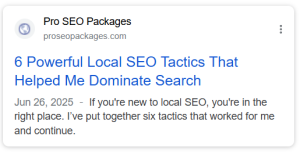
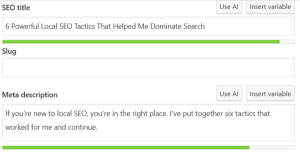
Image Suggestion: Screenshot of a filled-out Google Business Profile dashboard.
If I could only pick one strategy to recommend, this would be it. Claiming and optimizing my Google Business Profile (formerly Google My Business) was a turning point.
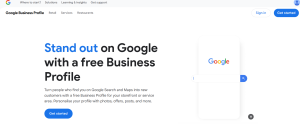
Here’s how I did it step-by-step:
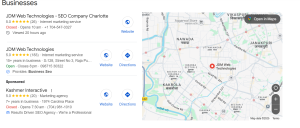
The more complete your profile, the better you’ll show up in Google’s local 3-pack (those top 3 map results). It’s like having a free billboard at the top of Google.
Also, Google now allows adding social media links and even shows social media posts directly in your profile. Keeping your profile active tells Google you’re engaged and trustworthy.
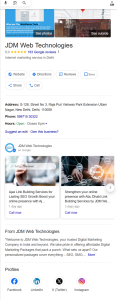
Image Suggestion: Screenshot of a 5-star Google review with customer images.
Online reviews have become the digital version of word-of-mouth—and they matter more than ever. I didn’t fully understand this at first, but after just a few 5-star reviews, my phone started ringing more.
According to a recent BrightLocal survey, 84% of consumers trust online reviews as much as personal recommendations.
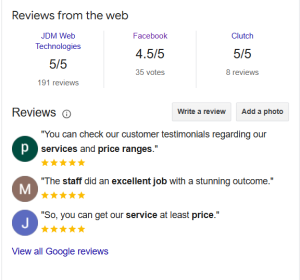
How I Built My Review Strategy:
And I always respond to reviews—good or bad. This shows I value feedback and take customer satisfaction seriously.
Google has even confirmed that high-quality, positive reviews help with local rankings. They build trust, improve click-through rates, and often show up directly in search results.
Don’t just ask once. Make review collection part of your daily process.
Image Suggestion: Website screenshot with multiple service pages in the menu.
This tactic was a game-changer for me. Originally, I lumped all my services into one generic “Our Services” page. But after some advice from an SEO-savvy friend, I broke out each offering into its own page.
Now I have pages like:
Why this works:
Plus, these pages give me space to add FAQs, testimonials, service area details, and unique selling points.
You don’t have to build them all at once. Do one each week. After a month, you’ll be ahead of 90% of your competitors.
Image Suggestion: Logos of popular directories (Yelp, linkedin, Facebook, etc.).
Another powerful move? Getting my business listed on key online directories—accurately and consistently.
Each listing (also known as a citation) should match your NAP exactly—Name, Address, Phone Number. Even a small discrepancy like “St.” vs. “Street” can confuse search engines.
I submitted my info to:
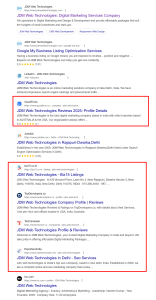
I also used citation aggregators like Data Axle, Foursquare, and Neustar Localeze. These services distribute your info to hundreds of directories across the web.
Don’t ignore this step. Citations send powerful trust signals to Google—and help potential customers find you even if they don’t search on Google.
Pro tip: Use tools like BrightLocal or Moz Local to audit your listings and identify missing or inconsistent citations.
Image Suggestion: A Facebook post showing customer engagement and behind-the-scenes content.
Social media isn’t just for influencers. It’s a powerful tool for local businesses too—especially now that Google is starting to show social posts in Google Business Profiles.
I started by choosing just two platforms where my audience was active—Facebook and Instagram. I post:
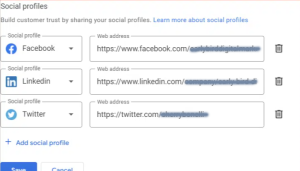
Even just posting twice a week helped build familiarity with local customers. It also increased engagement on my Google profile, which led to better local rankings.
Now, people who search for me on Google often click through to my Facebook page. They see the real people behind the business—and that builds trust.
If you’ve made it this far, you’re already ahead of most local businesses. But don’t treat these tactics like isolated checkboxes. When done together, they work like a local SEO machine.
Here’s how I tie it all together:
By integrating all these efforts, I created a solid, growing online presence that continues to drive results.
I get it—local SEO can seem overwhelming. But I promise, if you commit to just one of these tactics each week, you’ll start seeing a difference in traffic, calls, and conversions within a few months.
Here’s a quick recap of the six essential steps:
These aren’t magic tricks—they’re proven strategies that helped me grow. And they can work for you too.
Our team builds custom local SEO packages designed to help businesses like yours dominate search and drive more leads. Reach out for a free consultation today.