

How Pro SEO Packages Improve Search Visibility
Sep 1, 2026
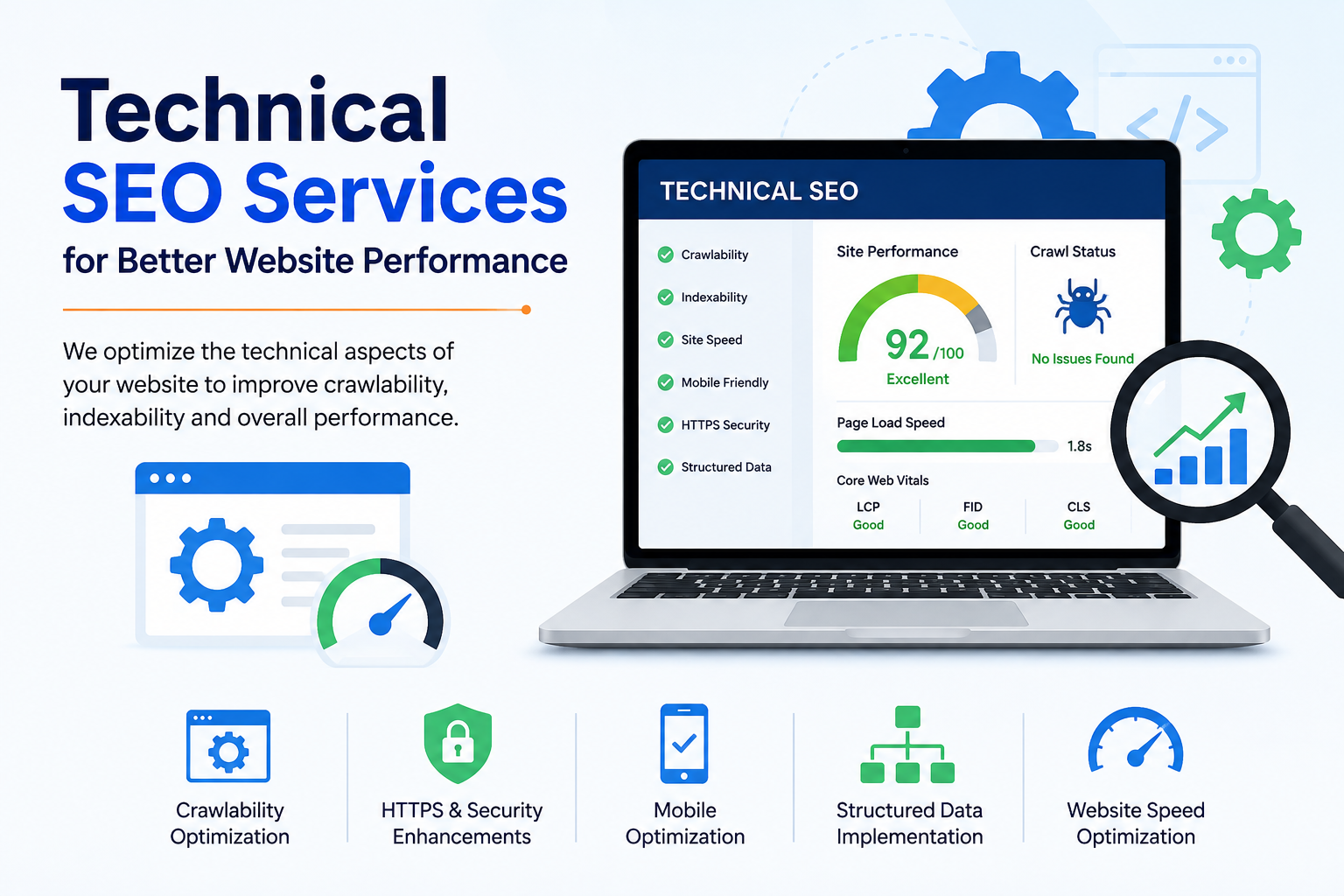
Your website can have excellent content, attractive design, and valuable products or services, but technical problems can still prevent it from performing well in search results. If search engines cannot efficiently crawl, understand, index, and render your pages, your visibility can suffer.
Technical SEO focuses on the technical foundation of your website. It helps search engines access your content while making your website faster, more secure, mobile-friendly, and easier to navigate. When you strengthen these areas, you create a better experience for both search engines and your visitors.
If you want a stronger technical foundation, professional SEO solutions for long-term website growth can help you identify issues, prioritize improvements, and maintain your search performance.
Technical SEO is the process of improving the technical elements of your website that influence crawling, indexing, usability, performance, and search visibility.
Unlike content SEO, which focuses heavily on keywords and information quality, technical SEO addresses how your website functions behind the scenes. It includes areas such as:
You do not need to optimize every technical element at once. Start with issues that prevent search engines from accessing important pages or create significant problems for users.
A technically healthy website gives search engines clearer signals about your content and structure. It also reduces friction for visitors.
For example, if your pages load slowly, users may leave before viewing your content. If important pages are accidentally blocked from crawling, search engines may not discover them. If duplicate URLs compete with each other, search engines may struggle to determine which version should appear in results.
Technical SEO helps you address these problems systematically.
A strong technical foundation can help you:
Technical SEO does not guarantee a particular ranking. Instead, it removes technical obstacles and creates conditions that allow your content and broader SEO strategy to perform more effectively.
Before making changes, you should understand what is happening on your website.
A technical SEO audit examines your website’s infrastructure and identifies problems affecting crawling, indexing, performance, and usability. You can use tools such as Google Search Console, PageSpeed Insights, and professional crawling software to uncover technical issues.
Start by checking:
Once you understand the problems, prioritize them according to their potential impact rather than attempting to fix everything simultaneously.
Website performance directly affects how visitors interact with your pages. A slow website can increase frustration, reduce engagement, and make important information harder to access.
Start by optimizing large images, reducing unnecessary scripts, enabling browser caching, and improving server response times. You should also review third-party tools because excessive tracking scripts, widgets, and external resources can slow down page rendering.
Pay attention to Core Web Vitals, including:
You should monitor these metrics regularly rather than treating performance as a one-time project.
Search engines increasingly evaluate websites based on mobile experiences. Your visitors also expect pages to work smoothly on smartphones and tablets.
Use responsive design so your content adapts to different screen sizes. Make buttons and navigation elements easy to tap, avoid intrusive elements, and ensure important information remains accessible without excessive scrolling.
Test your key pages on multiple devices. Pay particular attention to service pages, contact forms, checkout pages, menus, and other areas where visitors need to take action.
A mobile-friendly website is not simply a smaller desktop website. You should design the experience around how mobile users actually navigate and consume information.
Search engines need to discover and process your pages efficiently. Your website structure should therefore provide clear pathways to important content.
Review your robots.txt file to ensure you are not accidentally blocking valuable resources or pages. At the same time, avoid allowing unnecessary sections of your website to consume crawl resources.
Your XML sitemap should contain the canonical URLs you want search engines to discover. Remove outdated, redirected, duplicate, or irrelevant URLs from the sitemap.
You should also use Google Search Console to monitor indexing changes and investigate unexpected exclusions.
Your website architecture determines how pages connect with one another. A logical structure helps users find information and helps search engines understand relationships between topics.
Organize your website around clear categories and services. Keep important pages accessible through relevant navigation and internal links.
For example, a service page can link to related services, useful guides, FAQs, and supporting resources. This creates topical relationships while helping visitors move naturally through your website.
Avoid creating unnecessary layers of navigation. Important pages should generally be reachable through a reasonable number of clicks from key entry points.
Internal links are an important part of technical SEO because they connect related pages within your website.
Instead of using generic anchor text such as “click here,” use concise, descriptive phrases that tell users what they will find after clicking.
Use internal links naturally. Avoid adding excessive links simply to increase the number of internal connections.
Fix Broken Links, Redirects, and URL Problems
Broken links create poor user experiences and can make website maintenance more difficult. Regularly identify URLs returning 404 errors and determine whether they should be restored, redirected, or removed.
When a page has permanently moved, use a relevant 301 redirect rather than sending visitors to an unrelated destination.
You should also maintain a consistent URL structure. Keep URLs readable, descriptive, and logically organized. Avoid unnecessary parameters, confusing URL variations, and frequent structural changes.
Before changing URLs on an established website, create a redirect plan and monitor the results afterward.
Duplicate or highly similar pages can create confusion about which URL should represent your content. Canonical tags provide search engines with a preferred URL signal.
Review canonical implementation carefully, especially on ecommerce websites, filtered category pages, pagination systems, and websites that generate multiple URL variations.
Do not assume every duplicate page needs to be removed. Instead, determine whether each version serves a legitimate purpose and whether search engines should index it.
Structured data helps search engines understand specific information on your pages. Depending on your website, you may use relevant schema markup for products, organizations, articles, local businesses, events, breadcrumbs, or other supported content types.
You should only implement structured data that accurately represents visible and relevant page information. Avoid adding misleading markup simply because you want enhanced search visibility.
For local businesses, accurate business information and appropriate local structured data can strengthen the connections between your website, services, and geographic relevance.
If you serve customers in specific locations, technical SEO should support your local search strategy.
Keep your business name, address, phone number, and other important details consistent across your website and relevant business profiles. Create useful location or service-area pages when they provide genuine value rather than producing nearly identical pages for every city.
Make sure location information is easy to find and supported by useful content. Your website should clearly communicate what you offer, where you operate, and how customers can contact you.
For local businesses, technical performance and local relevance should work together rather than being treated as separate strategies.
Search behavior continues to evolve beyond traditional blue-link results. Users increasingly ask complete questions through conversational search, AI-powered search platforms, voice assistants, and answer engines.
Your technical foundation should support this changing environment.
Use a logical site structure, clear headings, descriptive metadata, structured data, accessible content, and strong internal linking. Make important information easy to identify and understand.
For AEO, provide direct answers to common customer questions. For GEO, strengthen topical relevance and demonstrate clear connections between your business, services, locations, and expertise.
You should also support E-E-A-T principles by presenting accurate information, demonstrating expertise, maintaining trustworthy business details, and keeping important website content updated.
Technical SEO should not end after an audit.
Websites change constantly. New pages are published, plugins are updated, URLs are modified, scripts are added, and website platforms evolve. Any of these changes can introduce technical problems.
Create a regular monitoring process that checks:
When you monitor these areas consistently, you can identify problems before they become larger performance issues.
Technical SEO can become complicated as your website grows. Large websites, ecommerce platforms, multilingual websites, and websites with extensive JavaScript functionality often require deeper technical analysis.
Professional technical SEO services can help you identify high-impact problems, establish priorities, implement improvements, and measure results.
You should choose a strategy based on your website’s current condition rather than applying the same checklist to every business. A small local website may need a different technical approach from a large ecommerce platform.
The goal is simple: create a technically reliable website that search engines can crawl, understand, and index while giving your visitors a fast and accessible experience.
Technical SEO provides the foundation for sustainable website performance. When you improve crawlability, indexing, site speed, mobile usability, architecture, security, internal linking, and structured data, you make your website easier to use and easier for search engines to understand. Pro SEO Packages can help you address these technical elements through a structured and ongoing SEO strategy.
You should treat technical SEO as an ongoing process rather than a one-time task. Start with a technical audit, prioritize the issues that matter most, implement changes carefully, and continue monitoring your website.
A strong technical foundation allows your content, local SEO, AEO, GEO, and broader digital marketing efforts to work more effectively. With the right Pro SEO Packages, you can build a technically sound website that supports better visibility, stronger user experience, and sustainable search performance.