

On-Page SEO Strategies Included in Pro SEO Packages
Aug 25, 2026
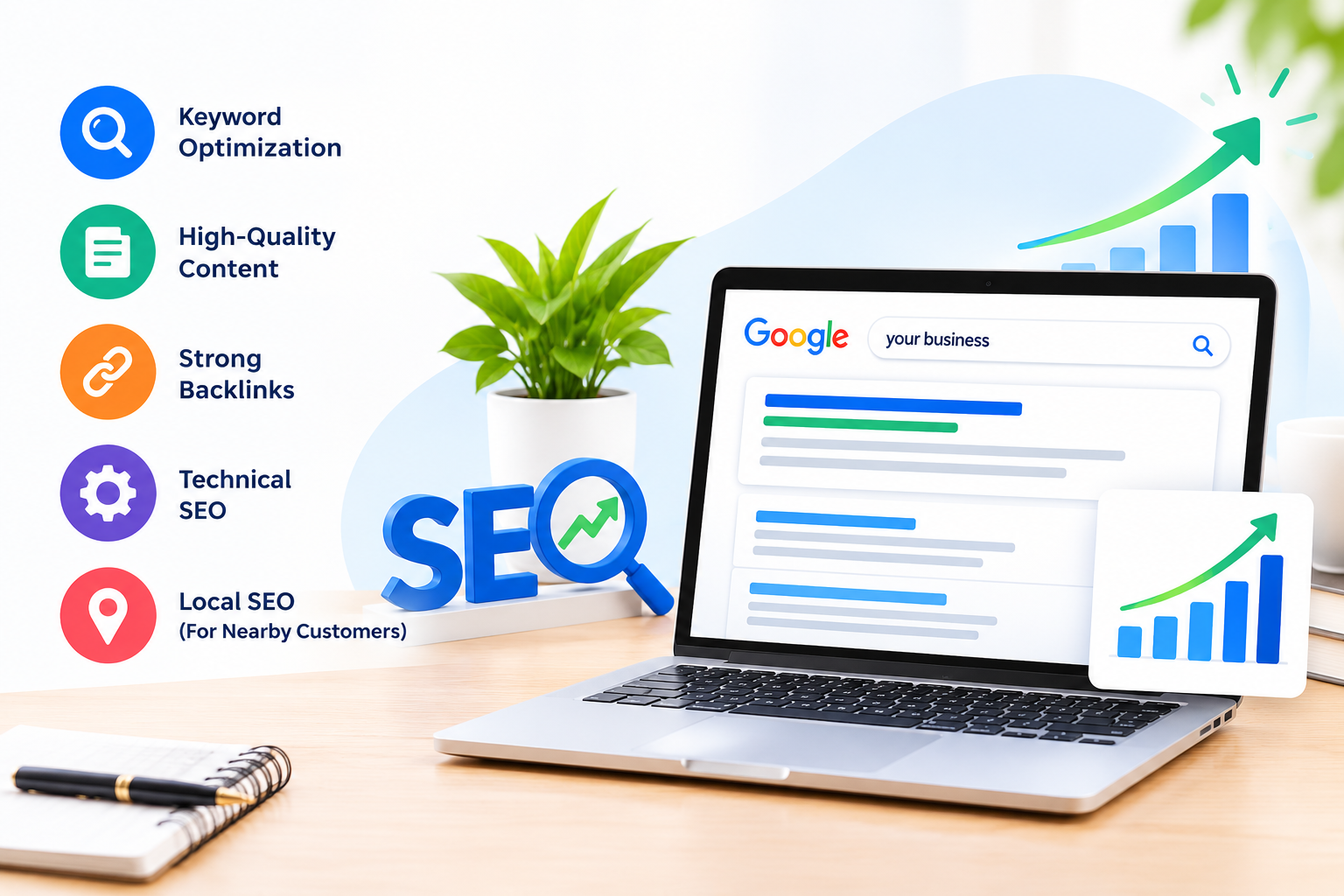
Search visibility determines how easily potential customers can discover your business when they search for products, services, solutions, or local providers online. If your website does not appear prominently in relevant search results, you can miss valuable traffic even when your services are strong.
This is where a structured Pro SEO Packages strategy can help. Instead of relying on one SEO activity, you can combine technical improvements, keyword targeting, content optimisation, authority building, local SEO, and performance monitoring into a coordinated approach.
When you use SEO strategically, you make it easier for search engines to understand your website and easier for potential customers to find useful information at the right stage of their search journey.
Search visibility refers to how prominently your website appears across relevant search results. It is influenced by factors such as keyword relevance, technical performance, content quality, website authority, local signals, and search intent.
For example, a business may rank well for its brand name but have limited visibility for important non-branded searches. A stronger SEO strategy focuses on both.
You should consider visibility across several search experiences, including:
Improving visibility therefore requires more than adding keywords to existing pages. You need to build a website that provides clear, useful, trustworthy, and technically accessible information.
A comprehensive SEO package can bring multiple optimisation activities together. This gives you a more organised way to address weaknesses while developing opportunities for sustainable organic growth.
Instead of treating SEO as a one-time task, you can use an ongoing process:
Audit → Optimise → Publish → Build Authority → Measure → Improve
This approach helps you identify what is preventing your website from reaching more relevant searches and gives you measurable areas to improve.
Keyword research helps you understand what your potential customers actually search for.
You can identify:
For example, instead of targeting only a broad term such as “SEO services,” you may create content around more specific searches related to technical SEO, local SEO, ecommerce SEO, or SEO packages for particular business needs.
Long-tail keywords can help you address specific user requirements and create content that matches search intent more closely.
Your website needs clear signals that explain what each page is about. On-page SEO improves these signals while making your content easier for visitors to navigate.
You can optimise:
Avoid forcing keywords into every sentence. Instead, use relevant terminology naturally and answer the questions your audience is likely to have.
A well-structured page should make its main topic immediately clear while providing enough supporting information to satisfy the visitor’s search intent.
Even excellent content can struggle when technical problems prevent search engines from efficiently accessing or understanding your website.
Technical SEO can address issues such as:
You should regularly audit your website rather than assuming that technical SEO is finished permanently. New pages, redesigns, plugins, migrations, and content changes can introduce new problems.
Search engines increasingly aim to provide useful answers rather than simply matching individual keywords. Your content should therefore answer real questions clearly and comprehensively.
You can strengthen your content strategy by creating:
When you create content around connected topics, you can demonstrate broader topical relevance.
For example, an SEO company could publish resources covering keyword research, technical SEO, local search, content optimisation, link building, analytics, and AI search visibility. Each topic can support related service pages through relevant internal links.
Internal linking helps users move between related pages while helping search engines understand relationships within your website.
You should link naturally between:
Use descriptive anchor text that tells the reader what they will find after clicking. Avoid using generic phrases such as “click here” when a more meaningful description is available.
For example, an article discussing technical optimisation could naturally reference technical SEO services when the reader would benefit from additional information.
Search visibility is also influenced by signals that demonstrate your website’s credibility and relevance.
A thoughtful link-building strategy can help you earn relevant mentions from other websites. Useful approaches may include:
Focus on relevance and quality rather than collecting as many links as possible. A smaller number of meaningful, contextually relevant links can be more useful than a large volume of low-quality placements.
If you serve customers in particular cities, regions, or service areas, local SEO should be part of your search visibility strategy.
You can strengthen local visibility by maintaining accurate business information across important platforms and optimising your website for location-specific searches.
Important areas include:
For example, a business serving several cities can create useful location pages that explain its services, service areas, local relevance, and customer needs instead of producing nearly identical pages with only the city name changed.
Search behaviour is expanding beyond traditional blue-link results. Users increasingly interact with AI-generated answers and conversational search experiences.
Generative Engine Optimisation, or GEO, focuses on making information easier for AI-driven systems to understand, retrieve, and potentially reference.
You can improve GEO readiness by:
This does not mean abandoning traditional SEO. Instead, you can integrate SEO, AEO, GEO, and content strategy into a broader search visibility framework.
Answer Engine Optimisation focuses on content that directly addresses questions.
You can make pages more answer-friendly by placing clear answers near relevant questions and expanding with supporting information afterward.
For example, if a page asks, “How long does SEO take to improve visibility?” you should provide a direct explanation before discussing the factors that influence results.
FAQ sections, concise definitions, structured headings, lists, and clearly organised information can make your content easier for users and search systems to process.
SEO should not be based on assumptions. You need performance data to understand what is improving and what requires further work.
Depending on your objectives, you can monitor:
Do not judge SEO entirely by rankings. A ranking improvement matters more when it contributes to qualified traffic, enquiries, leads, sales, or another meaningful business outcome.
Your SEO requirements depend on your website, industry, competition, target audience, geographic market, and business goals.
Before choosing a package, identify what you need to improve.
Ask yourself:
This assessment can help you select SEO activities based on actual needs instead of paying for disconnected services.
You can improve your results by avoiding common mistakes.
Keyword stuffing: Repeating keywords excessively can make content unnatural and difficult to read.
Thin content: Creating pages without meaningful information provides little value to users.
Ignoring technical SEO: Excellent content cannot compensate for serious crawling, indexing, or usability problems.
Duplicate location pages: Publishing near-identical pages for different cities can create poor user experiences.
Low-quality backlinks: Prioritising link quantity over relevance can create unnecessary risk.
Ignoring analytics: Without measurement, you cannot reliably determine which activities contribute to growth.
Publishing without strategy: A large volume of disconnected articles does not automatically create stronger visibility.
You can make your SEO process more effective by following a repeatable workflow.
Review technical health, existing rankings, content, backlinks, internal links, and local signals.
Research keywords based on relevance, intent, competition, locations, and customer questions.
Start with pages that can directly support your business objectives, such as service, product, category, and location pages.
Update outdated information, strengthen topical coverage, improve structure, add useful internal links, and remove unnecessary repetition.
Develop informative resources that answer related questions and support your core commercial pages.
Build relevant links, improve business listings, encourage genuine reviews, and develop useful local content where appropriate.
Review performance regularly and adjust your strategy according to search data, conversions, technical changes, and customer behaviour.
Search visibility is built through many connected factors. A technically healthy website with poor content may struggle to attract the right audience. Strong content without authority may have difficulty competing. Good rankings without conversion-focused pages may generate traffic without meaningful business results.
A coordinated SEO strategy helps you address these areas together.
When you invest in Pro SEO Packages, you can organise SEO around your business objectives rather than treating every optimisation task as an isolated activity. The goal is to create a website that search engines can understand, users can trust, and potential customers can navigate easily.
If you are ready to identify opportunities for improving your website’s organic, local, and AI-search visibility, review the available Pro SEO Packages and choose an approach that aligns with your current SEO requirements. You can also discuss your SEO requirements to determine which optimisation areas deserve priority.
Improving search visibility requires more than targeting keywords. You need a combination of technical SEO, useful content, on-page optimisation, internal linking, authority building, local SEO, AEO, and GEO.
By reviewing your website systematically, targeting meaningful search intent, improving important pages, and measuring real performance, you can build a stronger foundation for long-term search visibility.
Pro SEO Packages can combine keyword research, technical SEO, content optimisation, link building, local SEO, and performance tracking. This coordinated approach helps address multiple factors that influence how easily your website can be discovered for relevant searches.
Yes. Local SEO activities can improve visibility for location-based searches by strengthening business information, local content, reviews, citations, location pages, and other relevant local signals.
Technical SEO helps search engines crawl, understand, and index your website. Resolving issues such as broken links, indexing errors, slow pages, and poor site architecture can create a stronger foundation for organic search performance.
They can. SEO strategies that use clear structures, direct answers, authoritative content, strong topical coverage, and accurate business information can help prepare websites for AI-assisted search and answer-focused experiences.
The timeline varies based on competition, website condition, content quality, authority, target keywords, and market. SEO is generally an ongoing process, so you should measure progress through rankings, traffic, visibility, and business conversions over time.