

How Pro SEO Packages Improve Search Visibility
Sep 1, 2026
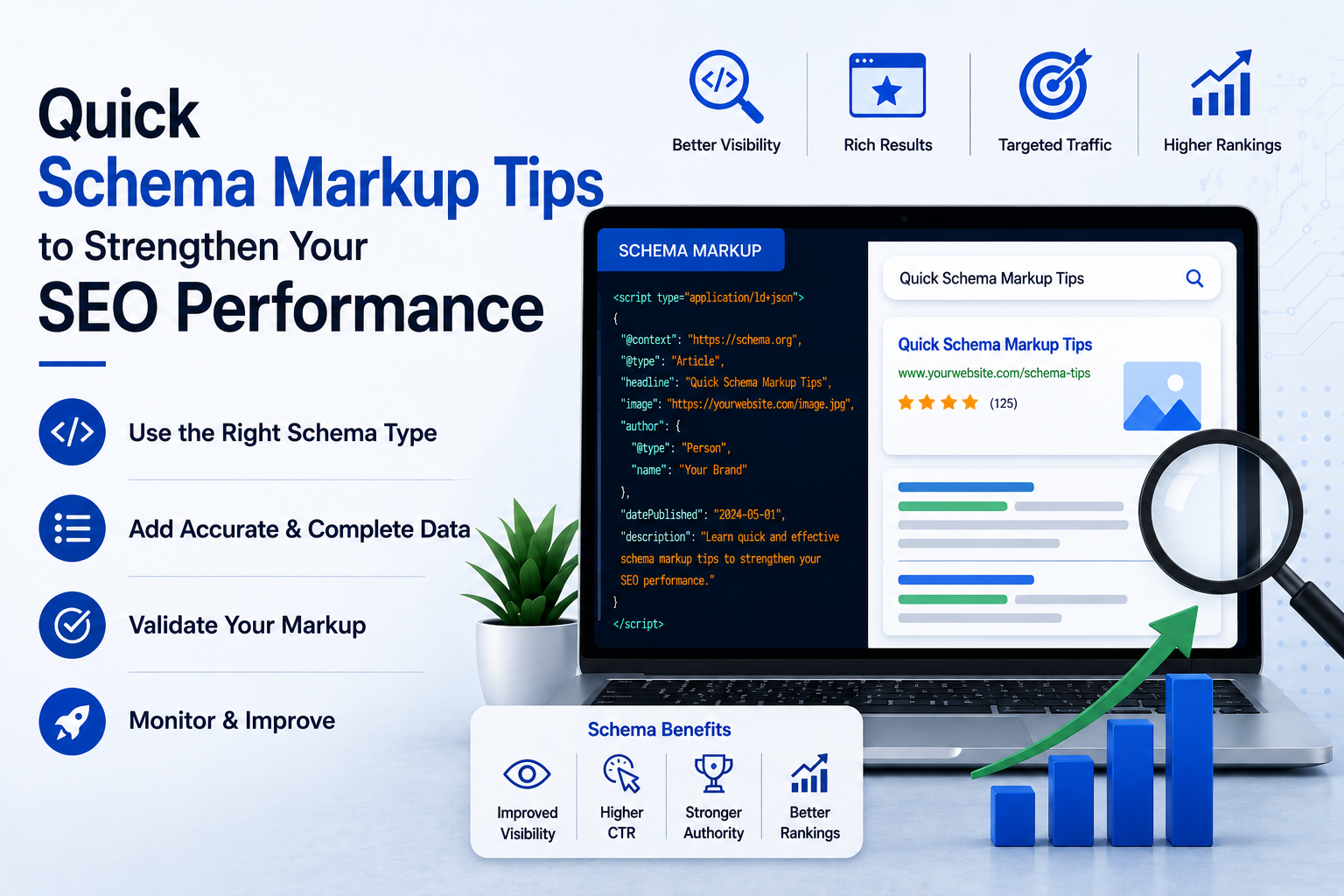
Search engine optimization continues to evolve as search engines become more sophisticated in understanding website content. If you want your website to gain better visibility, improve click-through rates, and increase organic traffic, implementing schema markup should be one of your priorities. Schema markup helps search engines understand your content more accurately, making it easier for them to display rich results in search listings.
Whether you run a local business, an e-commerce store, or a service-based website, schema markup can strengthen your SEO performance and improve your online presence. By using structured data correctly, you can provide search engines with valuable context about your content, products, services, reviews, events, and more.
This guide explains practical schema markup tips that can help you maximize your SEO efforts and stay competitive in today’s search landscape.
Schema markup is a type of structured data added to your website’s code that helps search engines understand the meaning of your content. It uses a standardized vocabulary recognized by major search engines.
Instead of simply reading text on a page, search engines can identify specific details such as:
When search engines understand your content better, they may display enhanced search results known as rich snippets, which can attract more clicks and improve user engagement.
Schema markup does not directly increase rankings, but it significantly improves how your pages appear in search results. Rich snippets often stand out from standard listings and provide additional information that encourages users to click.
Benefits include:
Businesses investing in professional SEO solutions, including comprehensive Pro SEO Packages, often prioritize schema implementation because it supports long-term search visibility.
One common mistake is adding every available schema type without considering relevance. Instead, focus on schema that aligns with your website goals.
Common schema types include:
This helps search engines understand your company details, including:
Ideal for businesses targeting local customers. It provides:
Perfect for e-commerce websites. It highlights:
Useful for blogs and news websites. It helps search engines categorize and display content effectively.
Frequently asked questions can appear directly in search results, increasing visibility and helping users find answers quickly.
Search engines recommend JSON-LD as the preferred format for structured data implementation.
Benefits of JSON-LD include:
Instead of embedding markup throughout your HTML, JSON-LD allows you to place structured data in a single script block.
This approach minimizes coding errors and simplifies future updates.
FAQ schema remains one of the most effective forms of structured data when used appropriately.
You should:
Well-structured FAQ content supports both traditional search optimization and Answer Engine Optimization (AEO), helping your website appear in voice search and AI-generated answers.
If your business serves a specific geographic area, local business schema is essential.
Include:
This information helps search engines connect your business with local search queries and map results.
Combining local schema with professionally managed Pro SEO Packages can significantly improve local search performance.
Customer reviews influence purchasing decisions and search visibility.
Review schema can display:
However, ensure that:
Misleading review markup may result in penalties or removal of rich results eligibility.
Breadcrumb schema improves both navigation and search result appearance.
Benefits include:
For example:
Home > Services > SEO Services > Technical SEO
Search engines can better understand the relationship between pages, improving site structure interpretation.
Content marketing remains a powerful SEO strategy. Applying article schema helps search engines identify:
This structured information can improve content discoverability and support inclusion in rich search features.
For websites publishing educational resources, guides, and industry insights, article schema should be a standard practice.
One of the most important rules is consistency.
Search engines compare structured data with visible page content. If they do not match, your website may lose eligibility for enhanced search features.
Always verify that:
Regular audits help maintain compliance and performance.
Even small coding errors can prevent schema from functioning properly.
You should routinely test your structured data using validation tools.
Check for:
Regular validation ensures search engines can read and process your markup correctly.
Many businesses overlook service schema opportunities.
If you offer:
Adding service-related structured data helps search engines understand exactly what you provide.
This can improve relevance for industry-specific searches and support GEO (Generative Engine Optimization) efforts by supplying AI systems with structured, trustworthy information.
The rise of AI-powered search platforms has changed how content is discovered.
Generative Engine Optimization focuses on making content understandable for AI systems that generate answers directly for users.
Schema markup supports GEO by:
When AI platforms evaluate websites for answer generation, structured data can help establish authority and trustworthiness.
Modern search engines rely heavily on entities rather than keywords alone.
Schema markup helps establish connections between:
These relationships improve semantic understanding and help search engines build confidence in your content.
As entity-based SEO continues to grow, structured data becomes even more valuable.
After implementing schema markup, monitor its impact through analytics and search performance tools.
Track:
Performance analysis helps identify opportunities for improvement and guides future optimization efforts.
Schema implementation should not be a one-time task.
Develop an ongoing process that includes:
As search technology evolves, your structured data strategy should evolve as well.
Schema markup remains one of the most effective ways to strengthen your SEO performance. By helping search engines understand your content more accurately, structured data improves visibility, enhances search listings, and supports both traditional SEO and emerging AI-driven search experiences.
Whether you are focusing on local SEO, content marketing, e-commerce optimization, AEO, or GEO, schema markup provides a strong foundation for long-term success. Implementing the right schema types, validating them regularly, and keeping information accurate can help you gain a competitive advantage in search results.
If you want expert guidance on structured data implementation, advanced optimization strategies, or customized Pro SEO Packages, visit our Contact Us page to discuss your SEO goals and discover opportunities to improve your online visibility.
Schema markup is structured data added to a website that helps search engines understand content more effectively, improving the chances of earning rich snippets and enhanced search results.
Schema markup does not directly increase rankings, but it can improve click-through rates, visibility, and search result appearance, which may positively impact overall SEO performance.
Local Business Schema is most effective for local businesses because it provides essential information such as address, phone number, business hours, and service areas.
Schema markup should be reviewed regularly, especially when business information, products, services, pricing, or website content changes.
Schema markup helps AI-powered search systems understand content structure, entities, and relationships, making your website more suitable for AI-generated answers and GEO optimization.